
 Back
Back


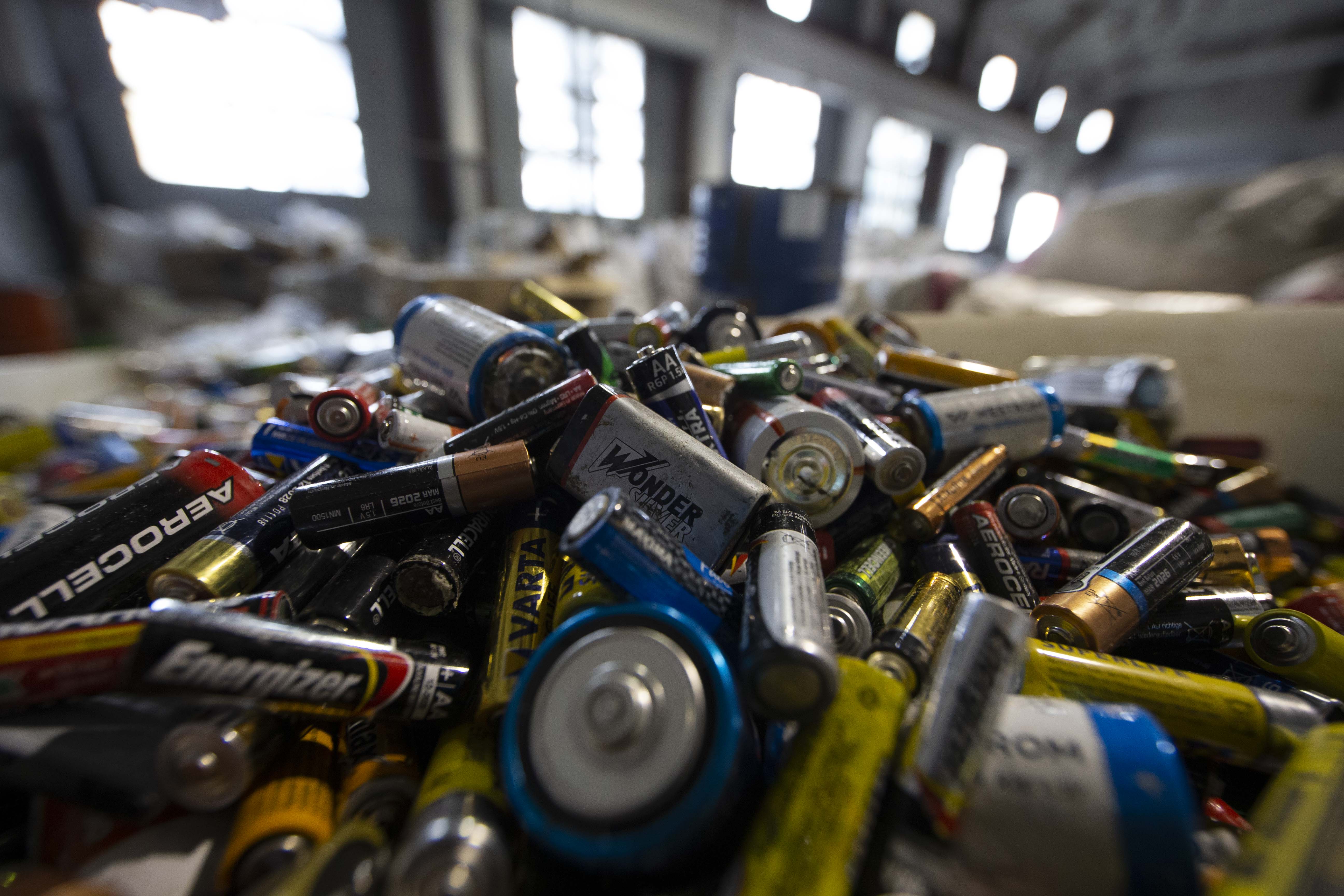
Battery waste management habits in Lithuania are changing: People make fewer mistakes while disposing of them, but also more frequently store them at home
The behaviour of primary battery disposal in Lithuania is changing. Over the past five years, the number of people disposing of batteries in household waste bins has fallen by up to 30%. However, a public survey commissioned by the hazardous waste management company “Žalvaris” shows an increase in the number of people who store used batteries at home.
“Primary cells are one of the hazardous wastes that are managed quite effectively in Lithuania. This is a result of the long-term public education and awareness-raising, as well as the establishment of a convenient collection infrastructure. Today, residents can deposit used batteries in special collection boxes located in numerous shopping centres, petrol stations and various public buildings, or dispose of them in one of the 20,000 battery collection boxes installed in the stairwells of apartment blocks. This collection network helps to ensure that most residents sort their batteries and dispose of them properly, without polluting the environment,” says Vitoldas Sapožnikovas, the CEO of “Žalvaris”.
What has changed over the last five years?
According to the survey, almost 90% of Lithuania’s population claims that they dispose of batteries properly. The most common way to do so is through the designated collection boxes in shopping centres. More than half of the respondents report this behaviour, which is similar to what they did five years ago. However, during this period, the number of people disposing of batteries in the stairwell collection bins has almost doubled, rising from 7% to 13%.
Around one in ten people said they collect batteries at home and then take them to hazardous waste collection points, whilst around 7% of respondents leave their batteries in collection boxes at petrol stations.
“These positive statistics are somewhat overshadowed by the fact that some residents still choose to dispose of used batteries by throwing them into household waste bins. Over the past five years, their share has fallen by a third, from 17% to 12%. However, even such a relatively small proportion has a significant impact, as batteries are hazardous waste that must be sorted properly to prevent environmental pollution,” says Mr Sapožnikovas.
According to the survey data, residents in rural areas are more likely to dispose of batteries in household waste bins.
Waste management tasks are fulfilled
The European Union has set a target for Lithuania to ensure the collection and sustainable management of used portable batteries and accumulators, aiming for a 45% collection rate. Lithuania achieves this target by collecting and managing an average of around 500–600 t of waste batteries per year.
However, the targets set for the coming years are more ambitious. Under EU requirements, the waste collection rate for portable batteries must reach 63% by 2027 and 73% by 2030. “This means that the current status of waste management will be insufficient, so we must encourage residents to sort their waste even more responsibly to meet the EU targets,” says Mr Sapožnikovas.
Lithuania has the potential to improve battery waste collection – this is confirmed by survey data showing that 9% of the population still store used batteries at home. By way of comparison, five years ago this figure was one-third of its current value, at 3%. Therefore, according to the CEO of “Žalvaris”, it is essential to encourage residents not to keep used batteries at home but to take them to designated collection points for sorting.
The expert also points out that the collection system in Lithuania is already well developed – residents can use thousands of collection points equipped in shopping centres, apartment blocks, petrol stations and offices.
“The current battery waste collection system is operational, but its full potential has certainly not yet been reached. With the existing infrastructure, we could collect far more battery waste than we currently do,” says Mr Sapožnikovas.
Double damage to the environment and the economy
Improperly managed primary cells result in a double loss to both the environment and the economy. Once they enter the mixed waste stream, they can release harmful substances that pollute the environment and eventually end up in soil and groundwater. At the same time, valuable raw materials that could be recycled and reused are lost.
“Each and every primary cell or battery that is not properly disposed of causes an environmental problem and a loss of market share, because we are throwing away materials that we could reuse,” notes the CEO of “Žalvaris”.
The solution for boosting battery waste collection is simple. Used primary cells can be collected free of charge at shopping centres, petrol stations, apartment blocks or waste collection points. Residents can find the nearest collection site on the EPA’s website: https://www.epa.lt/en/surinkimo-vietu-sarasas/.
A representative survey of the Lithuanian population, interviewing 1,013 respondents, was conducted by the research company “Spinter Research”. The study aimed to assess residents’ habits regarding battery waste disposal and their use of the current national waste collection infrastructure
 Back
Back